

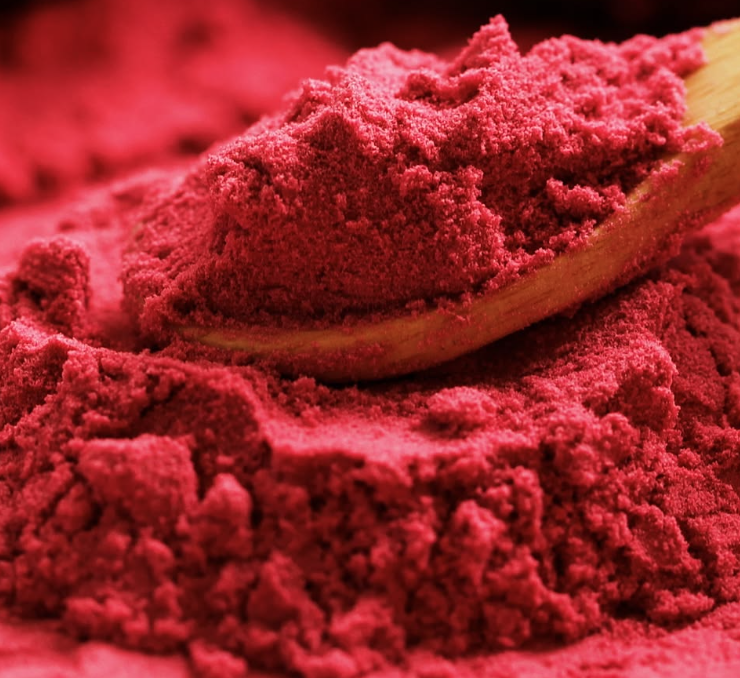
The appearance of a food product is often its first impression and before any consumer tastes it. The human effect of bright and natural-looking shades can affect shoppers’ perception of quality on a store shelf. As a result, Beetroot Colour is now a viable food additive for numerous food manufacturers. It also has close links to the increasing market demand for organic food colourings, particularly in food products where plant-based ingredients play a significant role in the product development process.
Naturally Rich Pigments
Beetroot is a natural source of pigments called betalains, which are used to impart attractive pink to deep red coloration in foods. Beetroot Colour is beneficial in a variety of product categories that require vibrant color, due to these pigments. Beetroot is being investigated as an organic food colouring as it is derived from a common vegetable source. Final colour may differ from formulation to formulation, concentration to concentration and production condition to condition.
Working Across Recipes
The demand for natural colours varies depending on the food, due to no two ingredients being identical, and no two production processes being identical. Beetroot Colour is suitable for use in beverages, dairy products, confectionery, bakery products, desserts and fruit preparations. Organic food color selection companies typically consider the compatibility of ingredients prior to production, so the selected colours can work during the entire processing and storage life of the food.
Understanding Performance Factors
Natural pigments are sensitive to various environmental factors during the manufacturing process and hence, testing is a crucial aspect of product development. Colour can be affected by temperature, light, oxygen and acidity over time. Typically, production teams would test Beetroot Colour prior to commercial use under realistic processing conditions. Other testing allows manufacturers to see how organic food coloring would perform over the assumed shelf life of the final product.
Supporting Product Identity
When a customer sees a color on one product, he or she expects to see the same color on other products he or she buys. Customers often have color expectations when they see one color on a product; they expect to see the same color on other products they buy. When a manufacturer makes several runs of the same product, it’s expected that the ingredients will be the same. Using reliable Beetroot Colour can help to ensure a more consistent product appearance and minimize unnecessary formulation changes. Reliable organic food coloring solutions also help to improve consistency when performing routine commercial production.
Practical Selection Process
In selecting natural color ingredients, several technical considerations must be taken into account beyond the visual. Product specifications, certifications, suitability of processing and technical documentation are often used to compare products before purchasing. A good Beetroot Colour ingredient will give more consistent results. Choosing a proper product of organic food coloring also aids the companies to run efficiently and create products for various food markets.
Future Color Possibilities
Manufacturers are innovating with plant-based ingredients, and the demand for these ingredients is growing. Natural color is now being used in many categories that were once synthetic. The recognized source and appealing colours of Beetroot Colour makes it an important option. Meanwhile, organic food coloring goes on enhancing the innovation of products, providing manufacturers with extra flexibility in recipe development.
Conclusion
When using natural color ingredients, it is essential to consider the formulations, production conditions, stability and appearance of the product to be created. Foodrgb.com has a range of solutions for the ingredients, including Beetroot Colour and organic food coloring options for manufacturers working on naturally coloured food and beverage products in various applications. A careful evaluation of ingredients prior to commercial production can result in greater consistency and can help to ensure reliable long-term manufacturing. For companies that are planning product development for the future, it is important to take into account natural color solutions that meet not only technical needs but also long-term product quality.
